
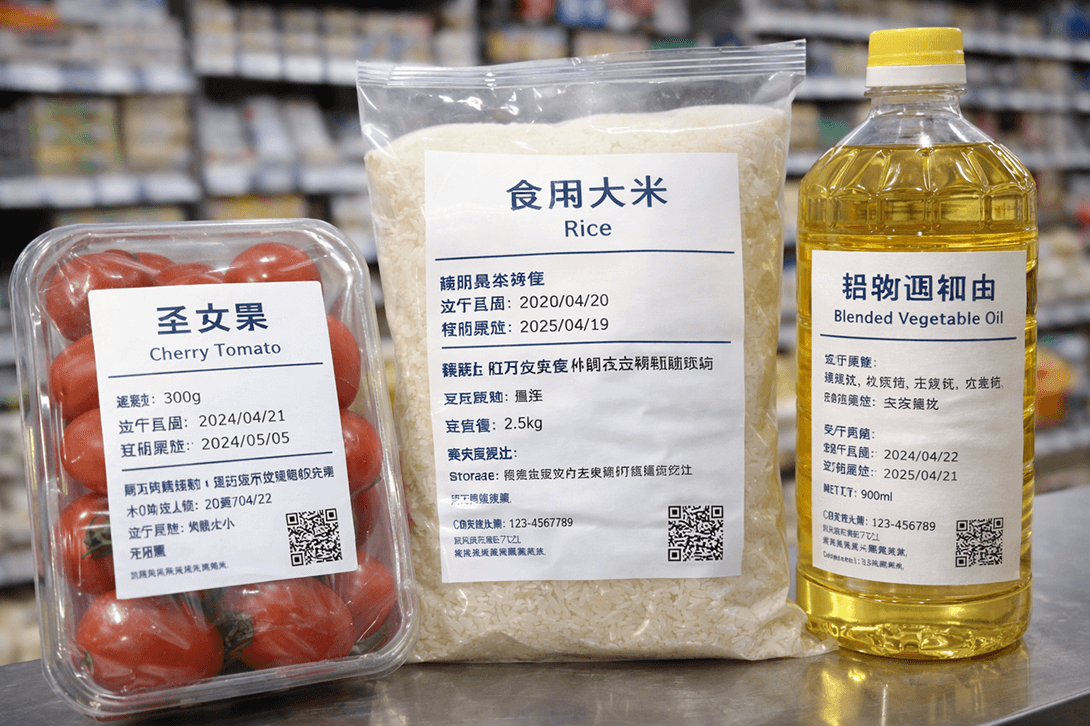
China has formally adopted new Food Labeling Supervision and Management Measures under State Administration for Market Regulation (SAMR) Order No. 100, marking one of the most comprehensive updates to food labeling oversight in recent years.
Published on March 26, 2025, the Measures will become enforceable on March 16, 2027, giving food businesses a two-year transition period to align labels, processes, and internal controls.
Why This Regulation Matters
The new Measures consolidate and replace multiple older labeling rules, bringing food labeling more directly under the framework of China’s Food Safety Law. The stated objective is to standardize labeling practices, strengthen enforcement, and reduce misleading or non-compliant consumer information.
Unlike previous guidance-focused documents, Order No. 100 clearly positions labeling as a regulatory compliance obligation, not a marketing or design consideration.
Key Labeling Changes at a Glance
The Measures introduce stricter and more explicit technical requirements for pre-packaged food labels, including:
-
Minimum font size requirements, with a baseline of 1.8 mm and higher thresholds for larger packages
-
Clear and independent display of production and expiration dates, with enhanced visibility rules
-
Standardized use of the terms “ingredients” or “ingredient list”, with clearer rules for repackaged foods
-
Mandatory use of standardized Chinese characters for core labeling elements
-
Tighter controls on food names to prevent misleading representations of ingredients or origin
For health foods and special dietary products, the regulation further reinforces warning statements, product naming consistency, and separation between food claims and medicinal claims.
Stronger Oversight and Enforcement Signals
Order No. 100 significantly strengthens the role of market supervision authorities at both national and local levels. Food producers and operators are explicitly made responsible for the authenticity, accuracy, and legality of labels, with expectations for internal review and approval processes.
The Measures also expand supervision to online food sales, requiring platforms to monitor labeling information displayed on product pages and take corrective action when violations are identified.
Penalties are clearly defined, particularly for false production or expiration dates, misleading claims, or prohibited wording. At the same time, the regulation allows proportional enforcement for minor, promptly corrected violations.
What Changes in Practice
For companies operating in or exporting to China, the new Measures signal a shift toward more uniform inspections and less tolerance for informal labeling practices. Label design, content approval, and version control will need to be treated as regulated processes rather than downstream compliance checks.
Importantly, foods produced solely for export remain subject to the labeling rules of the destination market, preserving flexibility for export-only production lines.
What to Expect Next
With enforcement starting in 2027, regulatory focus is likely to intensify during the transition period through guidance, inspections, and pre-enforcement signaling. Companies should expect labeling compliance to become a routine inspection priority, both offline and online.
Order No. 100 does not introduce radical new concepts—but it significantly raises the bar for consistency, clarity, and enforceability in food labeling across China’s market.
Regulation:
Food Labeling Supervision and Management Measures
State Administration for Market Regulation (Order No. 100/2025)
Enforceable from: March 16, 2027
Source: People’s Republic of China Government Portal
Explore SGS Digicomply’s Regulatory Intelligence Hub
SGS Digicomply’s Regulatory Intelligence Hub offers a powerful solution for managing regulatory complexities across 150+ jurisdictions. With AI-driven research tools, easy-to-read regulatory guides, change monitoring, and an interactive agenda, the platform empowers teams to make informed, timely decisions. Whether you’re tracking new rules or comparing global standards, SGS Digicomply is your essential partner for proactive compliance. See how it works in our demo.
.png?width=570&height=362&name=2025).png)


