Effective March 2026, China introduces major revisions to its national food safety standards for cereal-based complementary foods for infants and young children. Here's what you need to know.A Long-Awaited Update
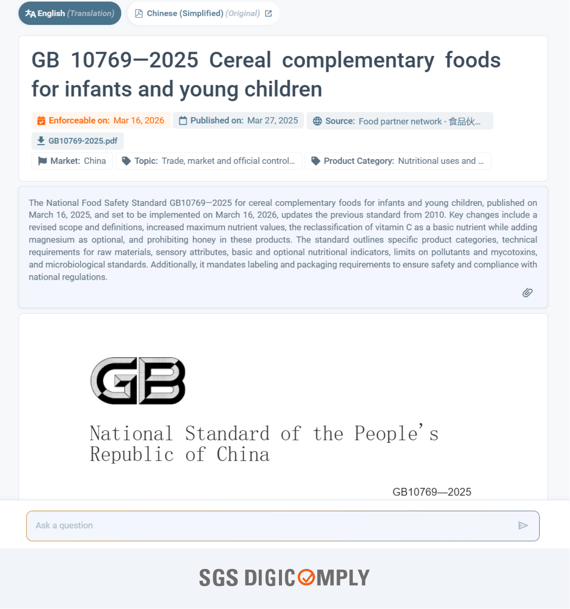
On March 27, 2025, China officially published GB 10769—2025, a comprehensive revision of its 2010 standard governing cereal complementary foods for infants and young children aged 6 to 36 months. The updated regulation will come into force on March 16, 2026.
This standard is part of a broader wave of regulatory updates targeting the infant nutrition sector, including revisions to GB 10770, GB 7098, and GB 19646. Together, these form the core of China’s approach to ensuring safety, nutrition, and quality in both domestically produced and imported infant foods.
Key Changes at a Glance
-
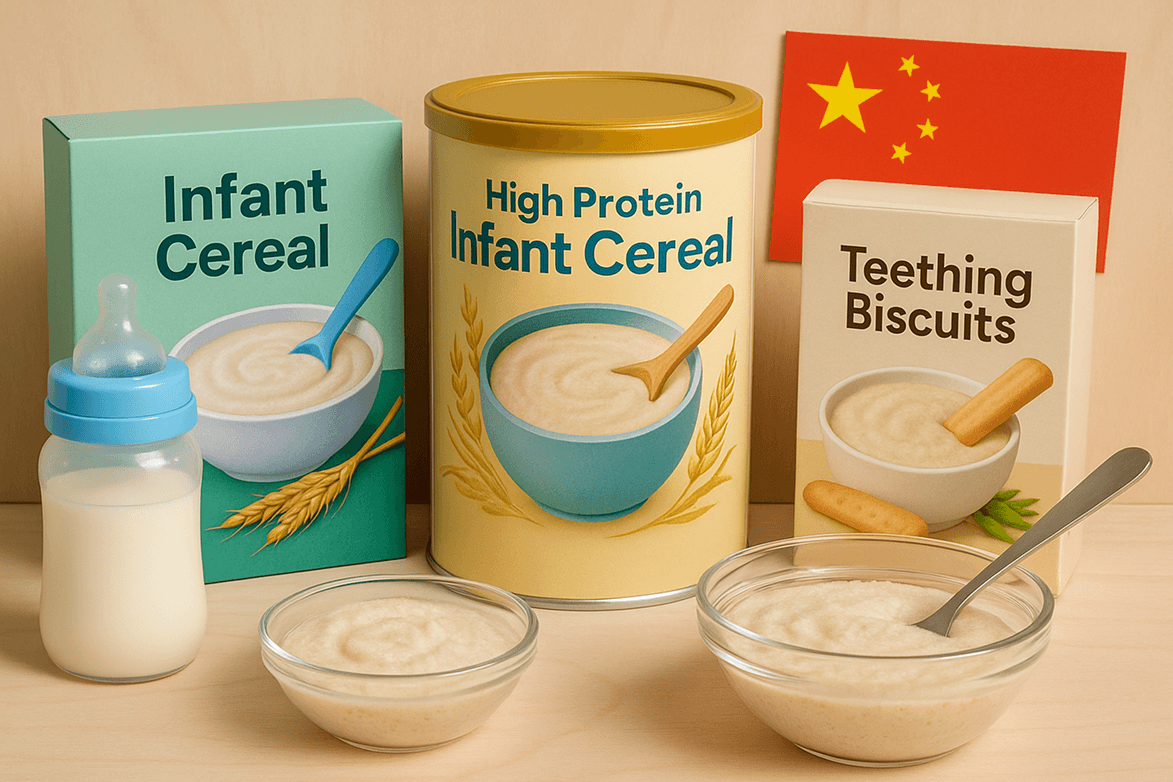
Expanded scope and definitions: The revised standard provides clearer distinctions among four categories of cereal complementary foods: standard, high-protein, raw (requiring cooking), and other (e.g. teething biscuits).
-
Nutrient thresholds raised: Maximum levels for several nutrients have been updated. Vitamin C is now classified as a basic nutrient, and magnesium has been added as an optional nutrient. Iodine has been removed from the list of essentials.
-
Sugar and honey restrictions: Honey is now explicitly prohibited. The regulation also tightens limits on the addition of sucrose, glucose, and related sugars.
-
Prohibited ingredients: Hydrogenated fats and irradiated ingredients are not allowed.
-
Microbiological and contaminant limits standardized: The new standard references national limits for pollutants, mycotoxins, and pathogens, aligning cereal baby foods with broader food safety benchmarks.
-
Labeling and packaging: Updated labeling must reflect category-specific usage guidance (e.g., "prepare with milk"), and packaging gases must meet safety standards.
Why This Matters for Stakeholders
For manufacturers and exporters, this revision represents a shift toward tighter nutritional control and alignment with international expectations. The explicit focus on sugar regulation and fortified nutrients reflects growing public health concerns around obesity, diabetes, and micronutrient deficiencies.
Importers and QA teams should start revisiting formulation specs, label claims, and testing protocols ahead of the March 2026 enforcement deadline. Products that don’t meet the new nutrient bands or ingredient restrictions could be blocked at customs or delisted by Chinese retailers.
For regulators globally, this is another clear signal that China is raising the bar on infant food safety. The use of harmonized methods (e.g. GB 5009 series) indicates a push for consistency and scientific rigor.
Final Thoughts
China's GB 10769—2025 is more than a minor tweak—it's a recalibration of what the government considers safe and appropriate nutrition for infants and toddlers. With a one-year window before it takes effect, companies should act now to ensure compliance.
Stay tuned as we track additional GB standard updates throughout 2025 in our Regulatory Watch series.
Explore SGS Digicomply’s Regulatory Intelligence Hub
SGS Digicomply’s Regulatory Intelligence Hub offers a powerful solution for managing regulatory complexities across 150+ jurisdictions. With AI-driven research tools, easy-to-read regulatory guides, change monitoring, and an interactive agenda, the platform empowers teams to make informed, timely decisions. Whether you’re tracking new rules or comparing global standards, SGS Digicomply is your essential partner for proactive compliance. See how it works in our demo.